
Marooned with a virus
Deadly virus outbreak aboard
MV Hondius explained
A luxury expedition cruise carrying more than 140 passengers and crew has become the centre of a rare global health scare after multiple deaths and confirmed hantavirus infections linked to the voyage.
The MV Hondius reached Tenerife in Spain’s Canary Islands on Sunday after the outbreak of the Andes strain of hantavirus — a rare rodent-borne virus capable of limited person-to-person transmission.
Among those aboard were two Indian crew members, who were evacuated to the Netherlands and are currently healthy and asymptomatic, according to the Embassy of India in Spain.
WHO chief Tedros Adhanom Ghebreyesus travelled to Tenerife over the weekend to oversee evacuation operations and reassure residents, saying: “This is not another COVID.”
How the outbreak started
Little-known pathogen triggers global health alert
Health authorities across multiple countries are now racing to trace passengers, monitor contacts, and contain fears linked to the rare outbreak aboard the MV Hondius.
The crisis centres on the Andes strain of hantavirus, the only known hantavirus capable of limited human-to-human transmission, though experts say such spread remains rare.
Passengers evacuated from the ship are being quarantined and medically monitored in countries including the United States, France, the Netherlands, and the United Kingdom after several deaths and confirmed infections linked to the voyage.
What is hantavirus?
Hantaviruses are rodent-borne viruses usually spread through contaminated urine, droppings, or saliva.
In the Americas, the disease can cause Hantavirus Cardiopulmonary Syndrome, a severe illness that attacks the lungs and heart.
Symptoms begin with fever, headache, muscle pain, nausea, and abdominal discomfort before progressing to breathing difficulties in severe cases.
There is no licensed vaccine and no specific antiviral cure.
Three deaths. One rare virus. A cruise ship stranded between continents.
Where the virus came from
For decades, hantaviruses were mainly associated with Europe and Asia, where they caused kidney-related haemorrhagic fevers.
That changed in 1993 when a deadly respiratory outbreak struck the Four Corners region of the United States.
Scientists identified a previously unknown strain called Sin Nombre virus, carried by deer mice. Of the first 33 confirmed cases, 17 were fatal.
Researchers later linked the outbreak to El Niño weather patterns that triggered a surge in rodent populations.
More than three decades later, hantavirus has again become the centre of an international health emergency.
A little-known disease has suddenly become the centre of a multinational health emergency.

A test tube labelled "Hantavirus positive" is held in this illustration taken May 7, 2026. (REUTERS)
A test tube labelled "Hantavirus positive" is held in this illustration taken May 7, 2026. (REUTERS)

A person in protective clothing stands next to an ambulance during an evacuation operation of suspected hantavirus patients. (REUTERS)
A person in protective clothing stands next to an ambulance during an evacuation operation of suspected hantavirus patients. (REUTERS)

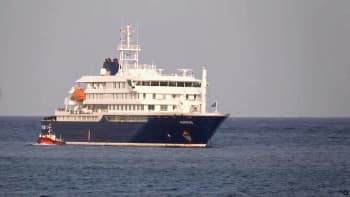
The Dutch-flagged MV Hondius, a cruise ship carrying nearly 150 people remains off Cape Verde. (AP photo)
The Dutch-flagged MV Hondius, a cruise ship carrying nearly 150 people remains off Cape Verde. (AP photo)
Why Andes virus stands out

The cruise ship MV Hondius is moored at an unknown location on May 5, 2026. (REUTERS)
The cruise ship MV Hondius is moored at an unknown location on May 5, 2026. (REUTERS)

Ambulances leave with one patient, evacuated from the MV Hondius cruise ship, in Amsterdam, May 6, 2026. (AP Photo)
Ambulances leave with one patient, evacuated from the MV Hondius cruise ship, in Amsterdam, May 6, 2026. (AP Photo)
Why the Andes strain worries scientists
The Andes virus, first identified in Argentina and Chile, is considered the deadliest known hantavirus strain.
Health authorities estimate its fatality rate at between 35 and 50 per cent.
The CDC says it is the only hantavirus known to spread between humans, though transmission is rare and usually limited to prolonged close contact.
The strain previously caused deadly outbreaks in Patagonia, including one in Epuyén in 2018–19 that infected 34 people and killed 11.
It spreads mainly through infected rodents — and can rapidly attack the lungs.
How the MV Hondius outbreak began
The Hondius departed Ushuaia in southern Argentina on April 1, 2026.
Among the passengers was a 70-year-old Dutch tourist who had reportedly spent months travelling across Argentina, Chile, and Uruguay before boarding the vessel.
He developed fever, headache, and diarrhoea on April 6 and died days later.
Weeks later, health authorities identified the Andes strain of hantavirus as the likely cause behind the growing cluster of infections linked to the ship.
A mysterious outbreak in the American Southwest changed virus research forever.
Timeline of the outbreak
April 25
The Dutch tourist’s wife boarded flights from Saint Helena to Johannesburg and later Amsterdam after developing symptoms.
April 26
She died in a Johannesburg hospital and became the first confirmed hantavirus case linked to the ship.
May 2
A German passenger with pneumonia died on board the Hondius.
May 3
Hantavirus was confirmed in a British patient in South Africa.
May 6
WHO confirmed the outbreak strain was the Andes virus. Several patients were medically evacuated from Cape Verde to Europe.
May 8
WHO reported multiple confirmed and suspected cases linked to the outbreak across several countries.
May 9
WHO Director-General Tedros Adhanom Ghebreyesus travelled to Tenerife alongside Spanish Health Minister Monica Garcia and Interior Minister Fernando Grande-Marlaska to coordinate the evacuation operation.
May 10
Spain and WHO begin evacuating passengers. Two Indian crew members are evacuated to the Netherlands and placed under quarantine monitoring. Indian authorities say both are healthy and asymptomatic.
One American passenger tests positive after evacuation to Nebraska but remains asymptomatic.
A French passenger develops symptoms during a repatriation flight to Paris and is placed in strict isolation alongside other evacuees.
Contact tracing challenge
Authorities are tracking passengers across continents
Public health officials say the biggest problem is not the passengers still on the ship.
It is the dozens who left earlier at Saint Helena before hantavirus was identified.
Governments across multiple countries are now tracing passengers, monitoring contacts, and isolating potentially exposed individuals.
Countries on alert
United States: One evacuated passenger tested positive after arrival in Nebraska.
France: One passenger developed symptoms during a repatriation flight.
United Kingdom: Returning passengers entered quarantine and monitoring.
Netherlands: Passengers ordered into six weeks of quarantine observation.
Tristan da Cunha: British military medics were deployed after a suspected case linked to the cruise ship.
A sign for the Arrowe Park Hospital, which will be used to house repatriated British nationals from the MV Hondius, in Birkenhead. (REUTERS)
A sign for the Arrowe Park Hospital, which will be used to house repatriated British nationals from the MV Hondius, in Birkenhead. (REUTERS)
Should the public be worried?
WHO officials say the wider public health risk remains low.
The Andes strain does not spread efficiently between humans, and there is no evidence of COVID-style airborne community transmission.
But the outbreak has shown how quickly one infection linked to a remote expedition voyage can trigger a multinational emergency response spanning six continents.
Cruise ship MV Hondius docks off Cape Verde port. (REUTERS)
Cruise ship MV Hondius docks off Cape Verde port. (REUTERS)
Number crunch
TRAVELLERS
140+
Passengers and crew aboard the MV Hondius
FATALITIES
3
Deaths linked to the outbreak so far
ANDES VIRUS
1
Only known hantavirus strain capable of person-to-person transmission
Hantavirus at a glance
Early outbreak
April 11 - May 3
The first death occurred on April 11, followed by a second on April 26. By May 3, one case was confirmed, with three suspected cases under investigation.
On May 3, the first confirmed case was announced when a British patient in South Africa tested positive, marking the beginning of contact tracing efforts.
By May 4, confirmed cases doubled to 2 while suspected cases peaked at 5. All three deaths had occurred by this point.
By May 6, WHO confirmed the rare Andes virus strain. Confirmed cases reached 5 as international contact tracing expanded across multiple countries.
By May 7, no symptomatic individuals remained on the ship. Confirmed cases reached 6 as health officials monitored the situation across multiple countries.
CO2 Parts per Million
By May 8, the outbreak reached 6 confirmed cases and 3 suspected cases across multiple countries, with 3 total deaths. The ship had been quarantined and contact tracing was underway globally.
Colour indicators: Red for confirmed cases, Orange for suspected cases, and Black for deaths.
With inputs from agencies
Similar Stories
Multiple Indian crew members aboard the MV Hondius cruise ship have developed symptoms following the deadly hantavirus outbreak. Health officials are monitoring the situation as the ship docks in Argentina.
An in-depth look at hantavirus, a rare but deadly zoonotic disease transmitted from rodents to humans. Learn about its symptoms, transmission methods, treatment options, and prevention strategies.
International health authorities have launched massive contact tracing efforts to track all passengers and crew from the infected cruise ship. The outbreak highlights concerns about disease transmission in international travel.
 Built with Shorthand